

High streets up and down the country have been in steady decline for the last 20 years.
The rise of online shopping, a global financial crisis, austerity, Brexit, Covid-19 pandemic and the cost of living crisis are all factors that have affected consumer habits, market uncertainty and ultimately the changing face, and use of our once-beloved high streets.
Dozens of national retailers, including former market giants such as Debenhams, Top Shop, Wilko and House of Fraser have disappeared, whilst local independent businesses are priced out of town and city centres due to unaffordable rates and rent.
Towns and villages across Cumbria and the Lake District are no exception, and the impact on the county’s important tourism and hospitality sector has resulted in the closure of many local businesses.
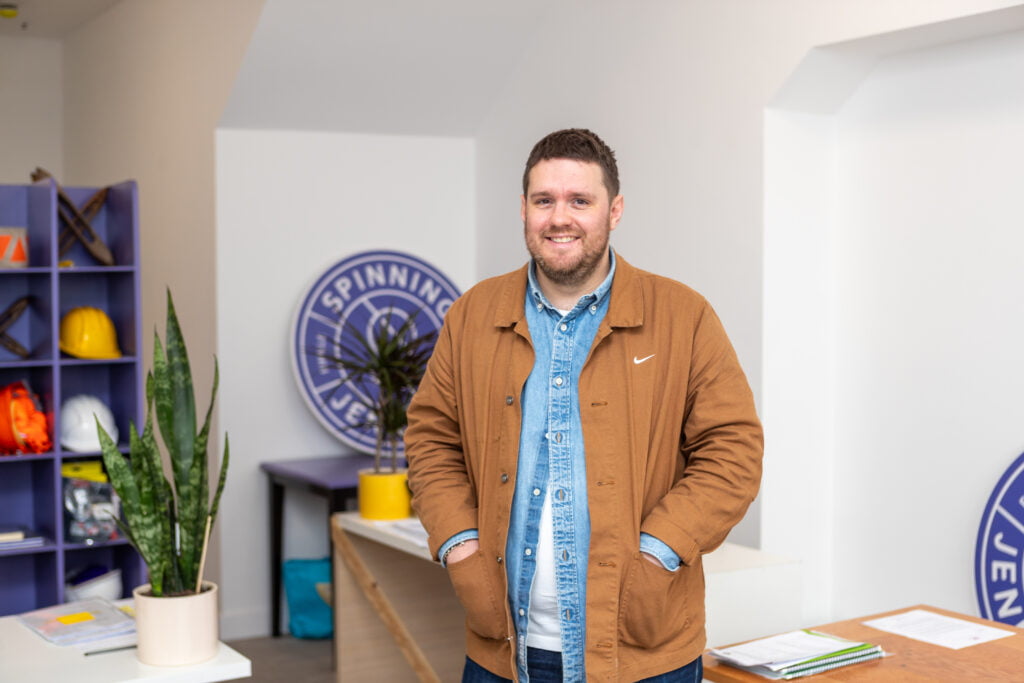
Kendal’s Spinning Jennies venue, on the corner of Finkle Street in the town centre, is determined to buck the trend.
The destination of small trading spaces mixes high-quality eateries and food producers with artisans, boutiques, creatives and retailers from across Cumbria in a collective trading space, in a similar model to Altrincham Market and Camden Town.
The venue has just announced the opening of LOOM, a new first-floor food market and bar serving Cumbrian food and drink produce.
Paul Jones, hospitality director at Spinning Jennies, said: “We have been working hard to be able to bring this type of multi-option eating out facility to Kendal and the Lake District.
“The use of local produce and variety of street-style food with global influence will undoubtedly add to the neighbourly fun and vibrancy re-emerging down Finkle Street.”
Plans for a similar venue, Stack Carlisle, were approved earlier this year by Cumberland Council.
Made from 50 shipping containers, it will feature five bars, 10 street food outlets and a stage for live music. Opening in 2024, the Lowther Street site in the city centre will employ up to 160 people.
Can ideas such as Spinning Jennies and Stack Carlisle make a difference to the future of our high streets and town centres?
The supermarkets and sprawling department stores may be long gone, but perhaps the preservation of self over stuff can be its saving grace.
Cumbria Chamber of Commerce says that it is fundamental for our city and town centres to change and be more mixed-use.
Suzanne Caldwell, managing director of the chamber, said: “If more people are living in these centres, it means buildings are brought back into positive use rather than sitting empty – they’re paying rates, the place feels more vibrant, and there’s more spend in the surrounding businesses.
“If premises are turned to other uses, such as the Spinning Jennies development in Kendal, it can transform shopping areas into learning and training spaces as well.
“In Barrow, BAE Systems are taking over empty shop premises for use as training and development facilities and more.
“Developments like those being undertaken by the University of Cumbria in Carlisle city centre have the same effect. It’s why the chamber has our head office in the middle of the city’s commercial centre.
“Another part of the picture is enabling and encouraging greater use of premises for leisure and cultural activities and breaking up larger spaces so they’re suitable for use by smaller businesses providing retail, food or leisure.
“It’s also important to have community activities to draw people into town centres and high street areas – festivals, events and markets. There is no singular answer to the challenges but a range of solutions which between them can bring our high streets and town centres back to life.”
As part of the Borderlands Growth Deal, the University of Cumbria is building a new flagship campus in the Citadels area of Carlisle city centre.
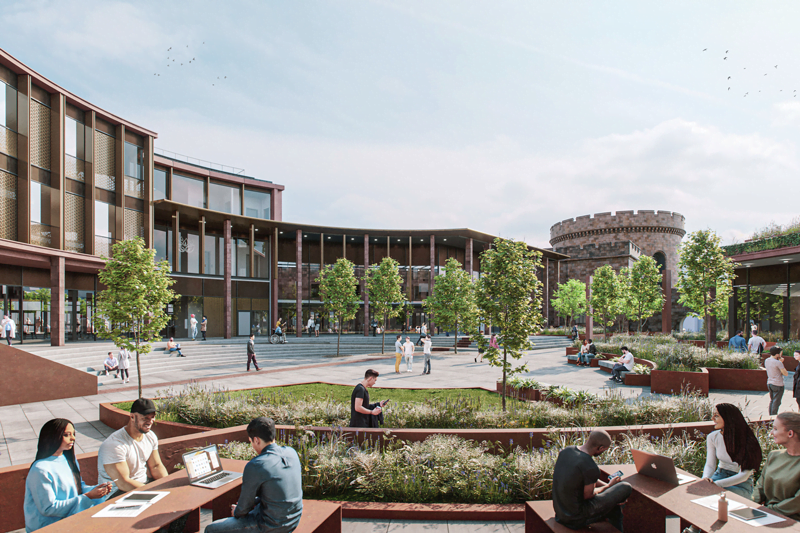
Following a series of public consultations on the plans, a university spokesman said: “a new campus will boost the city’s vibrancy and vitality to bring increased investment, activity, and footfall and enhance its standing as a University City.
“It will also improve skills and productivity in the local economy and Borderlands region.”
The redevelopment of the 1.65-hectare Citadels site is part of the Vision for Carlisle in 2030, which aims to develop the area into a thriving centre for business, residents, education and culture.
The university development will be delivered alongside the Carlisle Station Gateway plan, an £80 million project funded through the Borderlands Growth Deal alongside Cumberland Council and Network Rail.
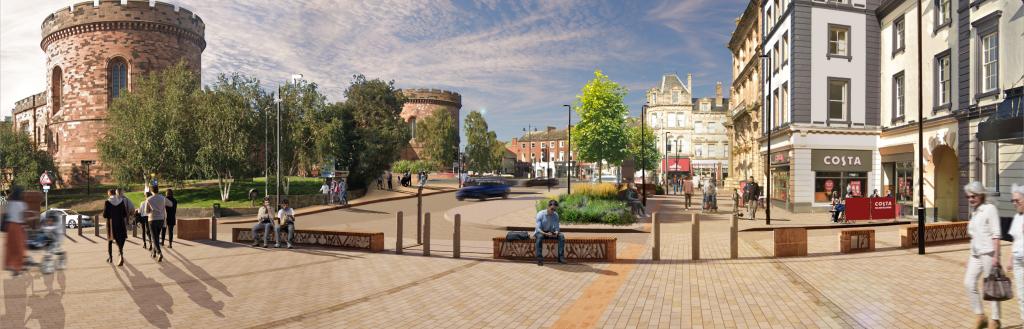
The scheme will see parts of Court Square pedestrianised, a revamp of the station interior, improved parking and better access for cyclists, pedestrians and wheelchair users.

Leader of Cumberland Council Mark Fryer, said: “This investment for Carlisle Railway Station has been several years in the planning and will improve both the station and immediate area for residents, students, local businesses, and our visitors.”
In Barrow, BAE Systems has bought and converted former retail units in Portland Walk into a new learning and training centre for new recruits and apprentices as part of a programme to recruit an additional 5,000 members of staff by 2030.
The careers hub also serves as a recruitment and information centre for other local firms.
Janet Garner, future workforce director at BAE Systems Submarines, said: “We’re proud to launch our new careers inspiration hub in the heart of Barrow to provide businesses and organisations a chance to showcase their employment opportunities.
“We’re determined to play our part in the regeneration of this brilliant town. Our Portland Walk Campus is the embodiment of that work and we’re already seeing more shops and local businesses return to the town centre.”
Ulverston-based Oxley Developments is one of the Cumbrian organisations who will use the Portland Walk space to promote their opportunities.
Jayne Moorby, Oxley Developments’ head of marketing, said: “We were delighted to be invited by BAE Systems to get involved in this modern, collaborative and technology led facility.
As it’s based on the high street, it is perfectly placed to increase the visibility of all the opportunities available in the Furness area.”
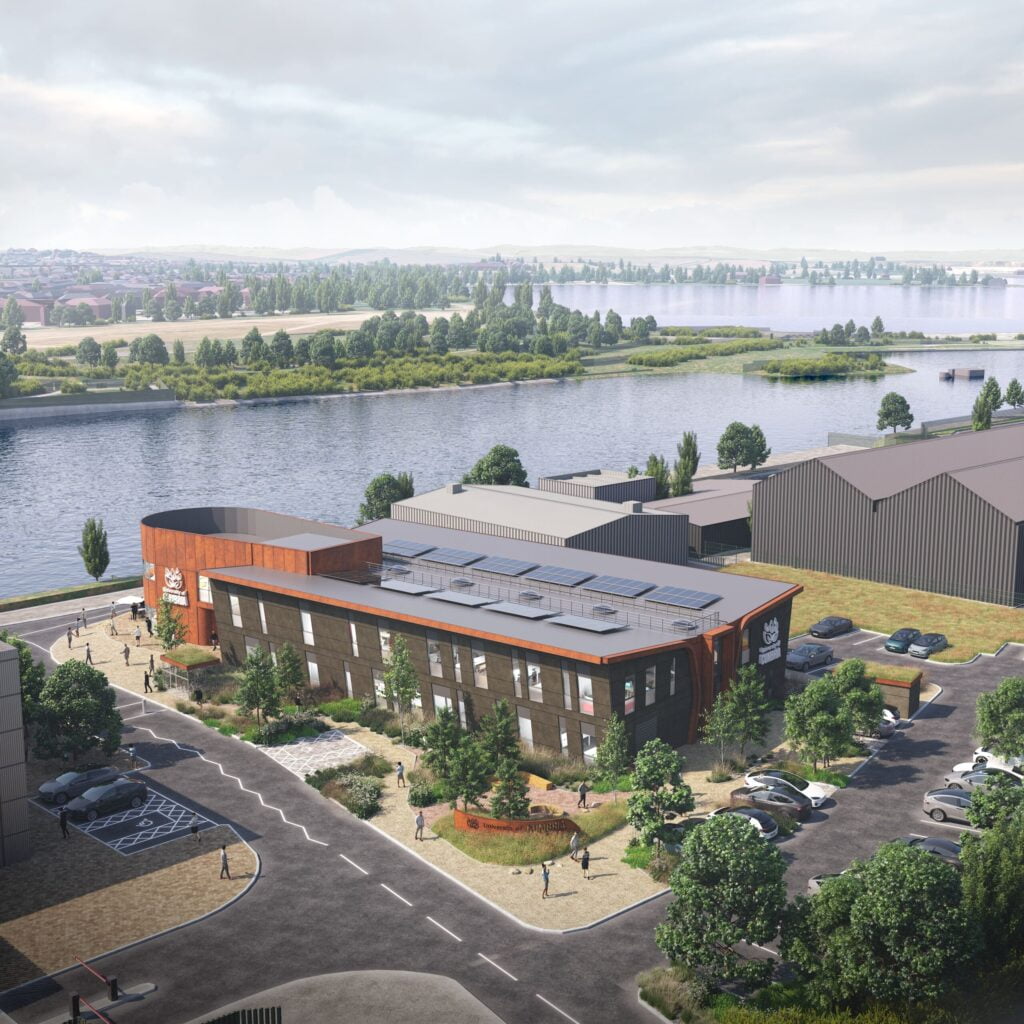
In 2019, the Government announced a Future High Streets Fund worth over £1 billion as part of the Levelling Up agenda, to renew and reshape town centres and high streets in a way that drives growth, improves experience and ensures future sustainability.
The fund provides financial support to business cases which are approved by local authorities. In Cumbria, the funding is administered by Cumberland and Westmorland & Furness councils.
In Cumberland, almost £10 million has been allocated towards a range of priorities including the improvement of town centres, access to arts, leisure and cultural activities, supporting community projects and regeneration, better access to education and training, and more support for start-up businesses.
Westmorland & Furness Council recently announced £8.1 million funding from the UK Shared Prosperity Fund (UKSPF) to be invested into community projects including support for local businesses, enhancing employment opportunities and training for young people, and improving town centres.
The various pots of funding through Borderlands, Levelling Up, UKSPF and Future High Streets present a complicated picture and may seem focused on larger towns such as Carlisle and Barrow, but the funds are being invested across the county.
Schemes are already underway in smaller towns such as Millom, Ulverston, Whitehaven, Cleator Moor, Keswick and Egremont to enhance town centres, drive footfall to high streets, improve parking and accessibility for local consumers and businesses alike.
Only time will tell if the combination of funding grants and Government investment can meet the myriad demands of local communities and create a more sustainable future for our high streets and town centres.