

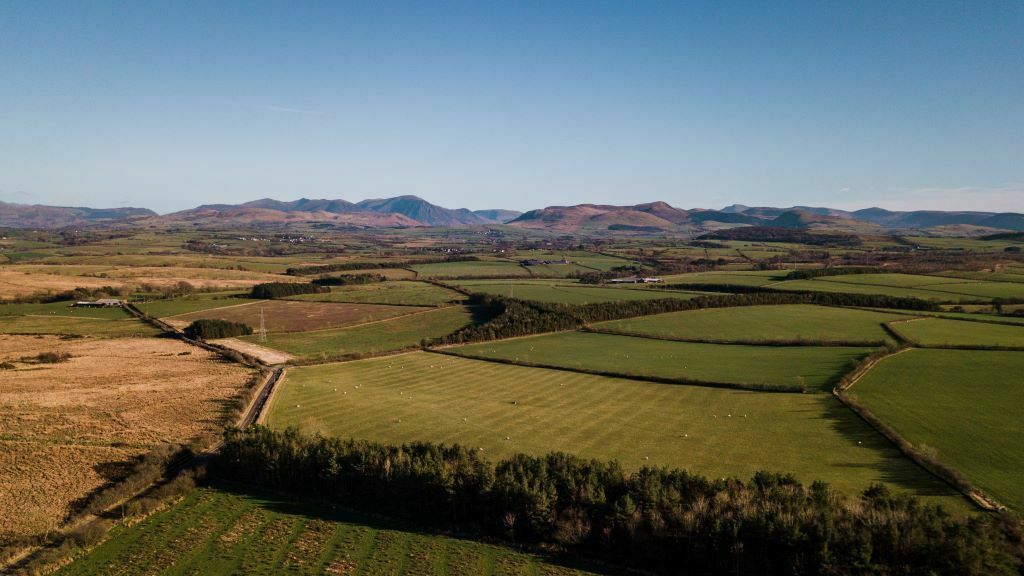
The Lake District; 912 square miles, home to England’s deepest lake and highest mountain and on the ‘must-see’ list of millions of tourists every year.
It’s also the home to a small and declining number of people who live there all year around.
Less than half of the land is owned by members who make up the Lake District National Park Partnership. The majority – 63% – is in private ownership.
The partnership’s five-year plan, a piece of work setting out how the 24 members will tackle the challenges the area faces, is now up for review.
The draft has been pulled together in meetings that are not held in public or at the moment a matter of public record as neither the agendas nor the minutes for the last four have been published.
The partnership is chaired by Dr Celia Caulcott, an academic and an independent who’s urging people to have their say on a plan that will set the course for the park over the next five years.
Business Crack’s Nigel Thompson has been talking to her to learn more about the plan and the way the partnership works.
As a friend once sagely said, ‘the hardest ship to steer is a partnership’.
For Dr Caulcott, the independent chair of the Lake District National Park Partnership, the role of guiding if not steering the ‘ship’ has been hers for the last two years during a period of major change both nationally and here in Cumbria.
Covid, and the impact it had on tourism, is still a recent memory.
A growth in fly-camping, continuing concern over water cleanliness along with the sustainability of farming and climate change are among a long list of issues that many within the national park are grappling with.
The area is under a constant media spotlight and with a mayor set to have a say on the area within the next two years, the focus on a new plan for area is acute.
Cleaner rivers and lakes, more viable and sustainable farming, improved management of the environment are just three of nine wide-ranging objectives set out in the document which has been drafted by the 24 members who make up the Lake District National Park Partnership.
“Collectively, the partnership is effectively a collaboration in which we come together to work together,” Dr Caulcott said.
With members ranging from United Utilities to the Friends of the Lake District, it’s a varied group and one where agreeing common ground is, she admits, sometimes a challenge.
As chair her role is to ensure each has a say and a chance to influence the partnership’s policy, irrespective of their size.

“I’m involved because for most of my professional life I’ve been working on collaborations; building them, enabling them,” Dr Caulcott said.
“I’ve been coming here since I was six and I love the Lake District. My job basically is to hold the ring for the individuals who represent the organisations they are from. Sometimes that’s extremely exciting. You can see when people are really working together and it’s delivering.
“We’ve had some very, very constructive meetings this year when we’ve gathered and focused on developing the plan and found common ground.
“Sometimes it’s more difficult because there are tensions. Different partners have different needs and different ambitions.
“And one of the things about a collaboration is nobody gets everything they want. I say very clearly that my job is to make sure that everybody is heard and that they know they are heard.”
The current 124-page plan for the area runs for one more year and an update on progress so far has just been released.
A chart shows that while two thirds of the plan’s actions are either on target or have exceeded the set target the remaining third is either below target or there is no data available to assess.
For example the Farming in Protected Landscapes (FiPL) programme, a grant from DEFRA that offers funding to farmers and land managers in the Lake District to help projects which assist nature recovery, combat the impact of climate change, provide opportunities for the discovery and enjoyment of the landscape and its cultural heritage, has involved 500 farms where only 300 was the target.
In the current plan partners committed to a reduction in travel and travel-related carbon emissions with a target of 80% hybrid or online meetings when in fact 87% was achieved.
However a target to increase woodland cover by 253 hectares each year was set although in the current year only 63 has been achieved.
Only five from a targeted 100 farms businesses were supported with a carbon audit in 2024.
A project to help farms become more resilient and adapt to a changing climate through natural flood management has also recorded mixed results according to the latest annual report.
Of 100 farms set out as a target only 5 group projects were achieved.
One area that is also targeted in the new plan is an aim to encourage more of us to travel around the park using sustainable methods of transport.
In the current plan a target of installing 108 EV charge points by end of the plan was in fact achieved a year early in 2024/25.
While the number of privately owned vehicles used to transport visitors to the national park still make up the vast majority of journeys to the area, Dr Caulcott says there are signs of progress in encouraging more sustainable ways of reaching the lakes.
“We have seen an increase in the use of electric cars so that’s very positive and an increase in good management of parking,” Dr Caulcott said.
Figures from 2022 showed 7.9% of visitors used EVs to visit although how this measures up to the target of 30% this year will not be known until the results of the next Cumbria Tourism Visitor Survey are released.
Elsewhere progress on other transport initiatives has been mixed.
A target to improve 8 bus services has, it’s claimed, resulted in 6 improved routes along with improvements to the Wasdale Shuttle and Ullswater Hopper.
An initiative to encourage more people to use train, bus and ferry services via the introduction of three multi-modal ticket projects per year has though only seen one introduced so far.
As for new cycle routes – while preparation is underway, a target to open 6 additional cycle routes per year has not been met with no new routes opened and an application to the Borderlands initiative made last March still under review.
The partnership itself meets in private, something Gavin Capstick the chief executive of the Lake District National Park Authority told Business Crack earlier this year, allowed sometimes lively debate to take place.
Yet at the time we spoke, Dr Caulcott was surprised to learn from Business Crack that neither agendas nor minutes of the previous four meetings had been published on the LDNPA’s website.
At the time of writing, a week later, it’s still the case with neither these nor the annual report which is dated November visible on the website.
Could she appreciate that, for some, these leads to concern about the transparency of the organisation?
“The partnership is not a requirement. It’s not a statutory body. The national park authority publishes its minutes and its agendas, as does any local authority and any other equivalent local authority type body.
“Whereas the partnership has no legal status at all,” Dr Caulcott said. “It’s a deliberate decision by the 24 partners that they want to collaborate and work together.
“That safe space point is therefore quite important. But I think there has to be a balance between the safe space and the collaboration and the being open and engaged with people so that people can see.”
Agreeing to look at why no minutes have been published for six months she added: “I’ll also comment that the National Park Partnership Management Plan, once it’s finalised, will be the National Park’s statutory plan. And it will be the World Heritage Sites Plan.”
Getting all 24 to agree to a draft plan that can be measured has been a challenge.
Nine objectives are set out in the five-year plan which is now open for consultation:
- Deliver nature’s recovery
- Improve the conditions of our lakes, rivers and tarns
- Reduce carbon emissions
- Increase the resilience of the landscape to climate change and its carbon storage potential
- Help rural communities to be sustainable and vibrant
- Improve the viability and resilience of farms
- Improve the management of the historic environment
- Inspire people to understand, enjoy and care for the Lake District
- Improve integrated sustainable travel and reduce dependency on private vehicles
Dr Caulcott says much of the first part of this year has been spent gathering information from partners for use in the new plan; with 24 different groups involved, no mean feat.
Take carbon emissions for example. A reduction is one of the nine key targets set out for the next five years.
How easy has it been to agree what the target should be?
“We want to reduce carbon emissions by 77% and we’re also trying to sort out what we think our C02 emissions will be reduced by.
And we’ve got some thinking about agricultural greenhouse gas reductions,” Dr Caulcott said. “It takes quite a lot of effort to get these numbers because you have to balance ambition with pragmatism.
And I have partners who are very ambitious and partners who are very pragmatic, and partners who are both. So you’re getting those numbers, what your targets are going to be, is important but takes a while.”
One development that will happen during the course of the forthcoming five-year plan is the election of Cumbria’s first mayor. Introducing a so-called ‘tourist tax’ is one thing the first person to take on the role may choose to adopt.
Is there a risk then that the plan that is now in production could be overruled?
“We’re very clear as a partnership that we will engage with the mayoral candidates and the plan itself is our stall for the mayoral candidates to look at and consider,” Dr Caulcott said.
“For many of the partners, they’re already committed to a direction of travel. There’s a whole load of things that we will effectively as a partnership say to the mayor and the mayoral candidates. that this is our direction of travel.
“A mayor once elected could choose to do things that we can’t know about. This is really where the consultation is so important. The management plan has to be robust to the future.
“There’s no point having a management plan that is of insufficient material importance that a mayor could come and say, ‘well, that’s not really worth doing, is it?’”
Consultation on the new plan is now underway and will conclude at the end of January.
Three roadshows are being held at locations across the Lake District to spread the word.
- December 6 9am – 2pm: Muncaster Castle (Stable yard), CA18 1RQ
- December 10 10am – 2pm: Keswick Tourist Information Centre (Moot Hall), CA12 5JR
- January 13 3pm – 7pm: Marchesi Centre, Windermere LA23 2AF
Around 18 million people visit the Lake District each year along with 39,000 people who call it home.
So far, within days of the consultation beginning, several hundred comments have already been made.
How will people who do take the trouble to comment know if their points of view have been listened to and potentially adopted?
“An individual may put in a comment and they may never know whether that comment in its own right makes a difference,” Dr Caulcott said.
“What I genuinely hope is that people who’ve made comments will feel that we have at least listened. It’s a little bit like the partnership itself; one of my tasks is to make sure people know they have been heard.
“But just because you’ve been heard, it doesn’t mean you get what you want. So I think what people will see is the revision of the management plan.”
The aim, Dr Caulcott says, is to create a management plan that sets out a vision for the national park that will live on until 2051.
“There is a mission and there is an end game. This is a big piece of work, but it’s also an important piece of work. For any of us who are passionate about the Lake District, contributing to how we think about it for the future going forward is absolutely surely core to our being.
“This management plan is one of the tools, one of the ways in which the Lake District is managed going forward.”