

After a summer of disruption caused by anti-social camping, a debate over too many (or too few) tourists and a row over a tourist attraction which reached the High Court people will soon be able to have their say about the way the Lake District National Park will be managed over the next five years.
The Lake District National Park Partnership, a group made up of public bodies including councils and charities, has drawn up an 81-page plan which sets out what the partnership says are ‘targets that are realistic yet challenging.’
It also mentions the fact many of the partners are facing uncertainties when it comes to funding which may limit what can be achieved.
Among the nine point plan is an ambition to increase the number of visitors using sustainable transport (bus and rail) by 12% overall to 45% of all visitors.
At present around a third of visitors use buses or trains to get around. While a 10% increase in bus and train passengers there is a target to reduce private vehicles by 10%.
How? A greater provision of services, infrastructure along with information and marketing is the ambition.
One other area that the plan highlights which is possibly influenced by this summer’s high profile littering in several popular areas is an aim to ‘inspire people to understand and care for the Lake District.’
Improving the area’s rights of way network along with volunteering opportunities and engagement work is listed for attention.
While the aim is to ensure 65% of the rights of way network passes an ‘ease of use test’ from the current figure of 58%, the target for volunteering and engagement work is still under development.
Measures aimed at helping the farming industry are included in the plan with an aim to improve the viability and resilience of farms.
A joined-up network of advisors across the park is one aim along with measures to increase the adoption of ‘nature-friendly farming practices.’
The partnership’s sets out an ambition to help farmers diversify and develop new income streams.
Meanwhile wider rural communities are to be targeted by an ambition to increase the number of affordable homes along with those with a local occupancy clause as well as ‘controlling’ the proportion of houses used as holiday lets or second homes.
400 permissions and an additional 400 properties is the target for housing while the plan seems to rule out any increase in the number of holiday lets or second homes.
An aim to reduce ‘visitor pressures on communities, landscapes and the environment through maximising the impact resources (sic) and powers available’ is listed but the visitor management target is under development.
The landscape – how to meet the target of being carbon net zero by 2037 means a significant cut in emissions (77%) and increasing its resilience through the restoration of peatland and planting more trees – is highlighted in two key ambitions.
As for the Lake District’s watercourses, often in the public eye, the ambition is to improve the conditions of lakes, rivers and tarns.
The aim during the life of the plan is that the 43% that are currently classed as having good ecological status will have increased to 75%.
For swimmers the aim is that 100% of designated bathing waters will be classed as good while an ambition to reduced spills from 23 storm overflows by 90% and remove 77.4kg of phospherous from the Windermere catchment area is also included targets.
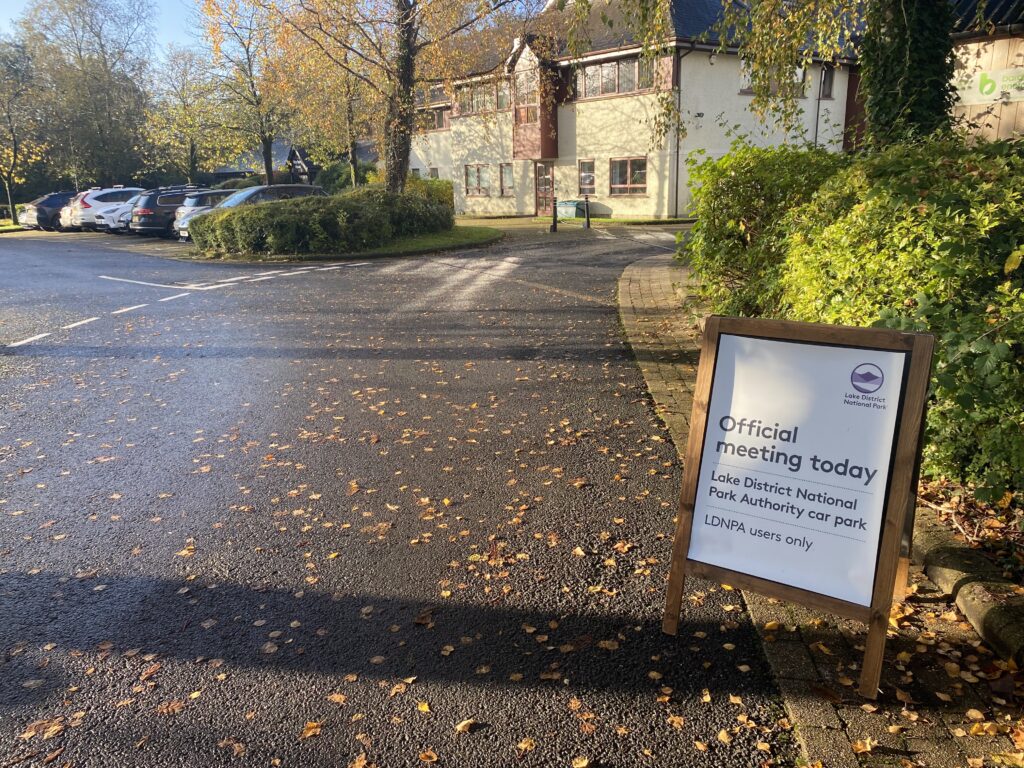
This morning, members of the Lake District National Park’s strategy and vision committee speedily agreed that the plan should go to public consultation although details of exactly how or when the consultation will take place were not discussed.
Speaking to Business Crack’s podcast Northern Lights, Lake District National Park Authority chief executive Gavin Capstick spoke of his hope that the plan would be in place next autumn.