

With 50,000 hectares of land that includes England’s deepest lake and highest mountain, the National Trust is major landowner in Cumbria.
It’s also responsible for the upkeep of historic buildings such as Hill Top, the home of Beatrix Potter as well as 88 farm tenants.
Last year the charity had to cut around 500 jobs nationally to save £26 million.
As 2026 gets underway and reorganisation takes effect, Business Crack’s Nigel Thompson hears from a senior National Trust manager about the changes that still being finalised and what difference they will make.
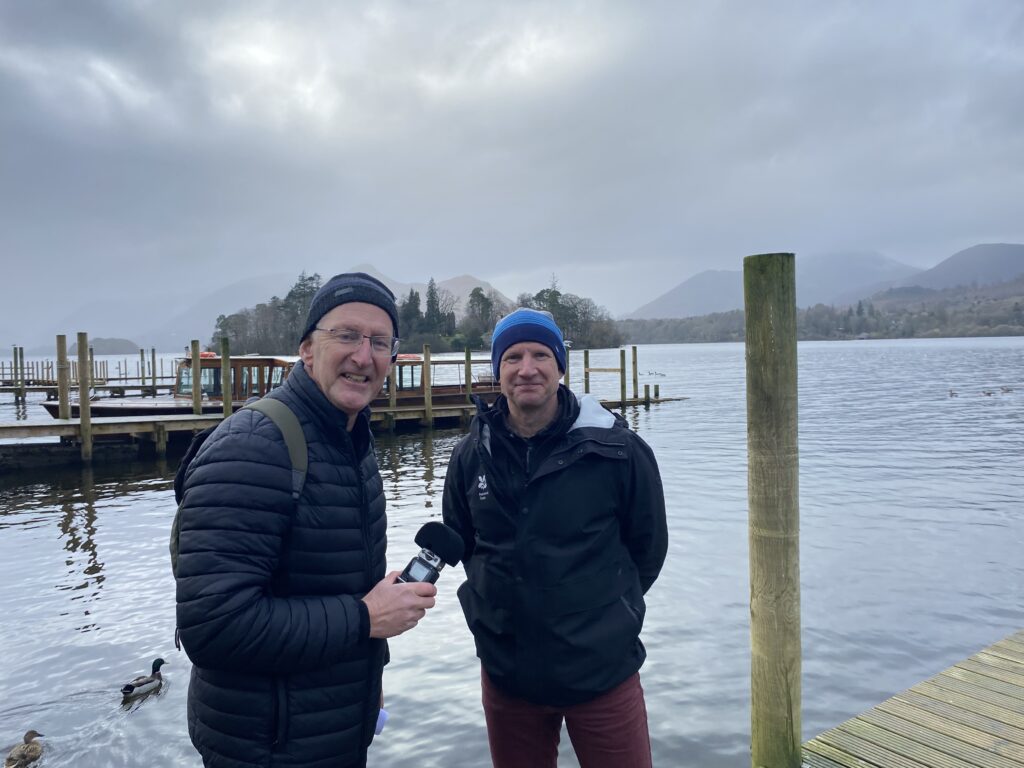
The geese are making their presence felt as Jez Westgarth, the National Trust’s assistant director operations for Cumbria and North Lancashire, and I meet on the shores of Derwentwater.
Winter still has a grip on the lake yet watery sunshine and the odd crisp clump of snowdrops hint at warmer days to come.
The National Trust is the biggest conservation charity in Europe.
The breadth and depth of the charity’s role is varied and maybe nowhere more so than in Cumbria.
“I’m responsible for all the National Trust’s activity across Cumbria, from rangers, to visitor welcome people to loads of specialists in our collections team, caring for places, our building surveyors, our archaeologists, all sorts of people,” Jez lists an impressive range of skills held by those who work directly for the charity.
Managing some of the 50,000 hectares of land the trust owns are 88 tenant farmers who Jez says play a vital role.
He says: “We work in partnership with lots of our farming tenants and we couldn’t look after the land here without them. As well as many other partners, we’re a key part of Cumbria, and we can’t do this alone.”
From coastal sites such as Earnse Bay, Arnside Knott and Heysham Head, to Crow Park in Keswick, the variety of land managed by the charity is extensive and maybe not as well as publicised as it could be.
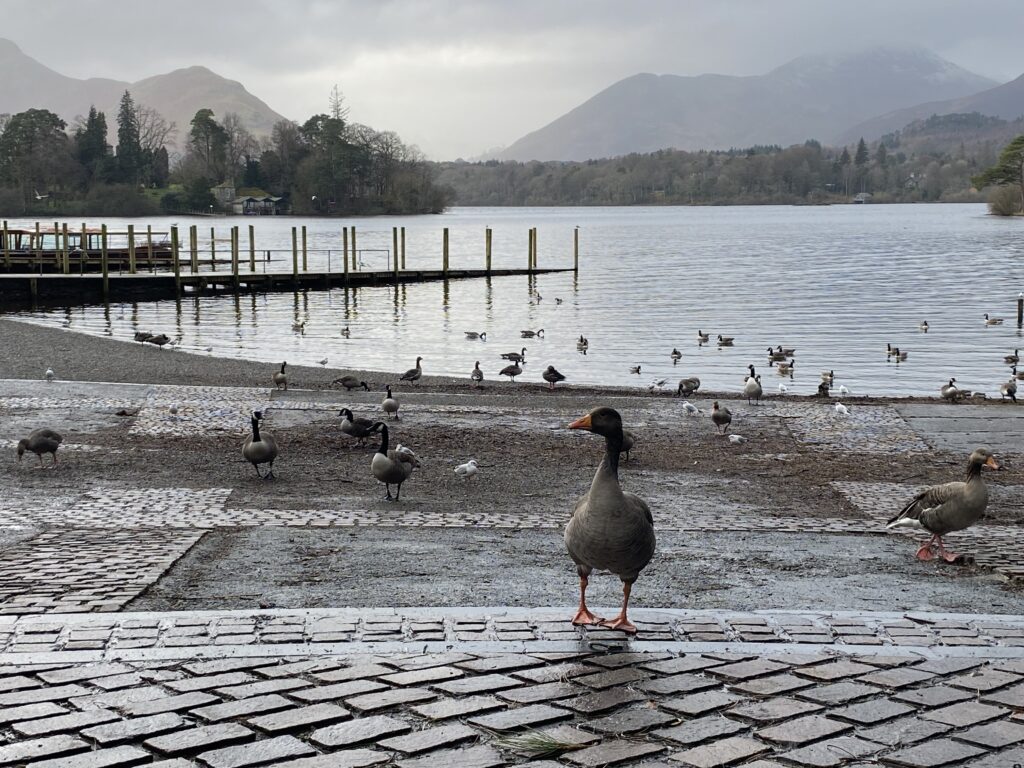
“I think we need to do a better job of helping people understand what we do and don’t do,” Jez says as a few hardy visitors join us on the lakeshore as drizzle returns.
As reported by Business Crack, the cutbacks have led to concern about what changes the charity may be forced to make both in terms of staffing numbers and the portfolio of property owned across Cumbria.
One example was Wordsworth House in Cockermouth said to be running at a six-figure loss each year.
With change to the organisation reported last summer, what difference will be seen in Cumbria?
“We’re not in the easiest economic times at all, and we have to reflect that,” Jez tells Business Crack. “We are a charity and while we’re not here to make money we have to make sure we balance our costs so that we can still look after our places and our landscapes, and ensure that people continue to enjoy them.
“We have unfortunately seen colleagues leave the organisation many of them have done that in the best way, which is through voluntary redundancy.
“As we look forwards we have achieved that and actually that’s affected our operational teams but also lots of our commercial teams, and we’re just in the final stages of that now.
“But looking forward, we have made savings, and we’ve made some adjustments to our structure that mean hopefully we can be successful into the long term.”
In terms of jobs lost in Cumbria single figures – ‘ones and twos’ according to Jez – are affected. What impact this will have on the charity’s operations in Cumbria is still uncertain. Will tenants or tourists notice a difference?
“I sincerely hope not because it’s about focussing on the things that are really important, “ Jez tells me. “We do have a very broad remit but we can’t do everything everywhere.
“The national park still has 18 to 20 million visitors a year visiting it, we need to make sure we help people have a great experience here so our frontline teams are hugely important.
“Our ranger teams, the people that do all the backroom planning and looking after, we just need to think about the priorities and where we apply those.
“And some places, houses, etc, need more time than others. Our farming work is hugely important, because actually that is key to underpinning our plans to help nature recover.
“I hope that people in Cumbria do not see that much change from what’s been an internal change, because it is a lot about our efficiency.
!Our priorities stay just the same as they always have done, which is giving people great experiences, looking after the landscape, and working with lots of people from local communities, to farm tenants, to partners, and that needs to carry on,” Jez adds.
The good news for those concerned about Wordsworth House in Cockermouth is the trust is keen to hear ideas about ways of spreading the appeal of the poet’s childhood home.
A consultation with the community will take place this year with the hope of drawing up a long term, sustainable plan. Businesses could be invited to make use of unused space in the Georgian property.
“We think it’s got loads more value, and can provide lots more benefit to the local community, perhaps through a different operating model than we currently have, which is by charging people to come in the door,” Jez reveals.
“It’s trying to throw our doors open really, and not have things sealed behind National Trust pay barriers where people can’t get in.
“We don’t always get it right, but we also quite often have to balance a whole range of competing commitments, and my view is ‘let’s talk’.”
And talking of money, the rising cost of trust membership (£168.60 a year for a family in 2026 – it was £61.50 in 2010) is something the charity is all too aware of.
“The thing that people often don’t understand is we are a charity, we’re not here to make profit,” Jez says.
“The money that we make gets ploughed directly back into the places that you have visited, so yes, I really appreciate we’re in very difficult times, and for some families actually it’s not an option, but there are places you can go for very low cost.”
Pointing to the land around the landing stages close to the Theatre by the Lake at Keswick, he adds:” We’re stood on National Trust land where we are now and you don’t realise that actually we do lots of things here. We look after the trees, we look after access, and that’s how it should be because we’re a public benefit charity.”
One example of where the trust is trying to collaborate to allow better accessibility to its’ sites is on Windermere.
“We’ve been paying for a bus connection between Windermere Lake Cruises to Windermere and up to Hilltop,” Jez explains.
“You can buy a joint ticket, that is better value for money, it’s still got a cost. I hope what you’re hearing is we do need to balance some income, we need to be able to pay for our costs, but people can come and experience things that we are responsible for without paying for it.”
Emerging from a period of change the charity still has an unenviable range of decisions to make; ensuring farms are viable and tenants can benefit from government grants, investing to ensure places like Hilltop, Wray Castle and Allan Bank can be preserved for future generations plus managing the sheer demand of tourists on remote valleys.
“For the last couple of summers some of our valleys have been overrun with visitors and that’s had a negative impact and we’re working really hard on that particularly with the police and crime commissioner and others to try and reduce that,” Jez explains. “I’m really conscious we’ve got to have a very careful balance about where we encourage more visitors and where we don’t.”
And for farming?
“We’re stood here on Derwentwater and actually we’re looking down into Borrowdale where we’ve got the recently designated Borrowdale National Nature Reserve which was achieved in conjunction with our farm tenants,” Jez says.
“Farming is part of the core of our landscape here. It is evolving and changing and we need to support that and we want to do that in a way that recognises the cultural heritage of farming but also helps us deliver more for nature and our land.”
Looking to 2026 and beyond the trust has set out a new plan of action nationally.
In Cumbria teams are hard at work preparing to reopen the trust’s properties while investment at Wray Castle on Windermere is underway and Jez is excited at the prospect of encouraging more people to the site.
“The castle is currently closed because we’re trying to refurbish it and improve it while the estate is wonderful and gives some of the best views of the Langdales,” he tells Business Crack.
“Much of Windermere Lakeshore is in private ownership and you can’t get there. You can with us and actually so there’s a really exciting investment there with a trail coming online this spring.”
Nationally membership numbers, reported to the trust AGM last year, decreased to 2.61million yet the numbers of people paying on the day increased by 5%.
The hope is that in Cumbria, efficiencies and more communication with the communities that benefit from the Trust could signal a more stable future.
“The National Trust might not be for everybody but I’m OK with that,” Jez says.
“What we want to do is give people opportunities to try and to come and see and just to understand that actually somewhere in the background that you might be walking along a footpath, you might be looking at the fells, it might just be enough to know that you know that actually the National Trust is quietly caring for these places.”