



It’s the backbone of electrical power supply in Cumbria and is about to undergo a major transformation, costing millions.
Pylons march across some of the most exposed landscape to be found anywhere in the UK. From Shap in the east to the exposed west coast, the power network, some of which dates from the 1930s, is to be replaced in what Electricity North West say is the largest ever investment in the region.
With major industries such as Sellafield, BAE Systems, Pirelli and Tata as well as domestic customers in urban as well as rural areas requiring a reliable source of power, the work is vital.
154 kilometres of overhead line on what’s known as ‘the Cumbria Ring’ will be replaced over the coming years. The ‘ring’ refers to the 132 kiloVolt electrical cables which loop around the county.
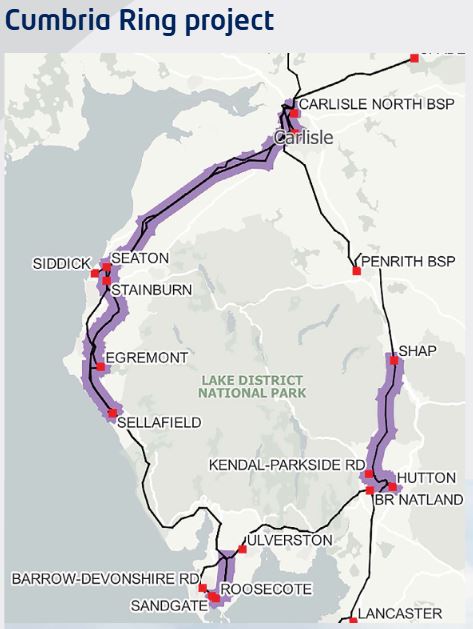
54 pylons will be rebuilt with sections around the county seeing significant investment. A 64km length from Egremont to Velle Vue will be replaced at a cost £7.65m with 50kim being renewed between Stainburn and Harker.
Speaking to Business Crack at a stakeholder engagement event in Lancaster this week, the company’s head of asset management Jonathan Booth explained more about the scale of the work and the benefits it will bring.
“We have a ring of towers that goes from Carlisle around the coast to Barrow and then connects to the National Grid,” Mr Booth, a Cumbria resident, said.
“Those lines were originally built in the 1930s and over the decades they’ve had to connect Sellafield, the power station at Roosecote etc and in recent times they are the route to get renewable generation out of Cumbria and export it to the country as a whole.”
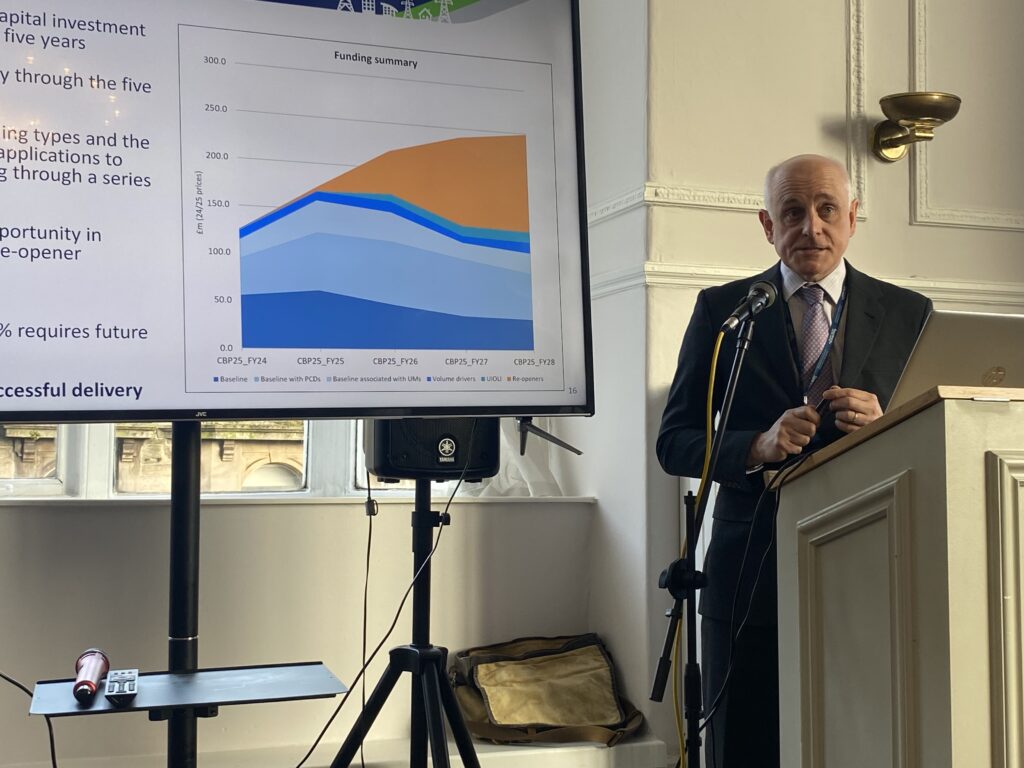
Tenders are now out for part of the £40m project with the company actively encouraging Cumbrian companies to apply for work. Electricity North West say two procurement processes are underway for general and minor works with contracts due to be awarded at the end of this year and early 2025. It’s expected work will start in the second quarter of next year.
The Government has signalled its intention to allow more on shore windfarms, doubling capacity by 2030. Planning policies have been revised so that onshore wind will be considered in the same way as other energy development as part of the National Planning Policy Framework (NPPF).
With this in mind, the capacity of the cables around Cumbria will be increased to cope with the increased amounts of power that could be generated.
But Electricity North West said the appearance of ‘the ring’ will be unchanged.
“The wires that hang between the towers will be upgraded and as more renewable wants to connect in Cumbria the capacity will be there,” Mr Booth said. ”Some of the towers will be replaced with identical ones often on the same location and with new technology we can use the same sized conductors as they are now more capable.”
Work is already underway at the Harker substation near Carlisle where National Grid and ENWL networks connect. £50m is being spent to increase capacity by 230 megawatts.
The ‘restringing’ of pylons will enable more power to be handled by the cables, double circuit will mean a higher capacity and the county will become a net exporter of power.
The increasing demand among drivers of electric vehicles to recharge along the M6 has also led to work to provide additional capacity at service stations along the motorway. Plans to work with Westmorland and Furness Council to allow an electrically powered ferry to operate on Windermere are underway too.
The gathering of businesses, local government staff and those aiming to encourage us all to be mindful of power consumption also heard how Cumbria’s power network is now more resilient when it comes to coping with storms.
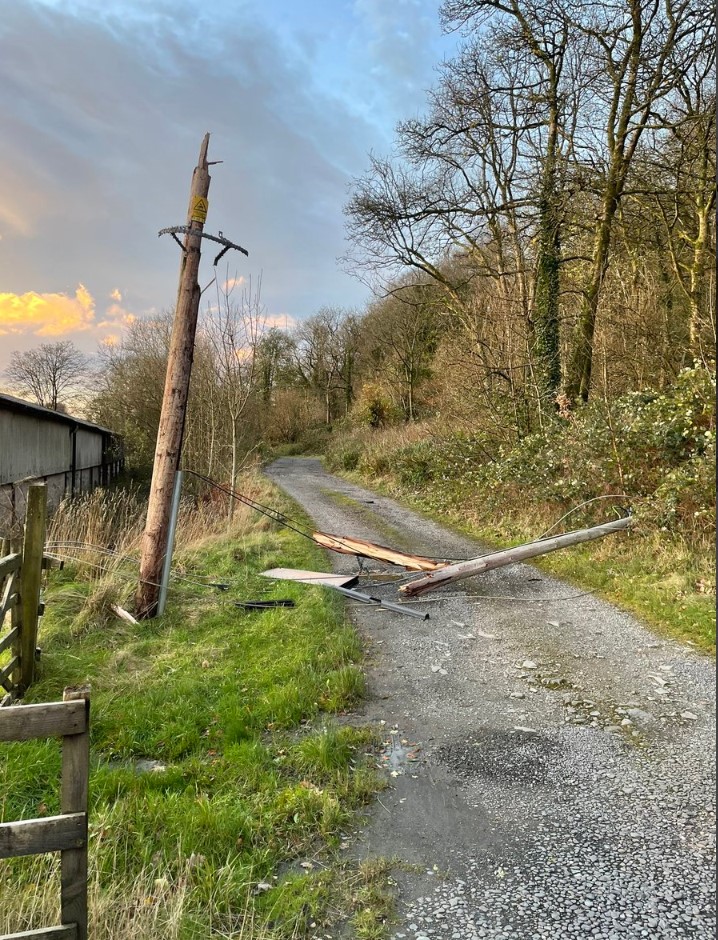
Storm Arwen led to significant disruption in the county with communities cut off for days. A bid to OFGEM for permission to invest in Cumbria to improve resilience was successful. £35m will be spent on projects over the next five years.
Among areas worst affected by the storm was Coniston which was fed only by lines originating in Ulverston. An additional electrical feed will be created linking the village with Ambleside. In Alston an additional connection will also be constructed.
Cumbria’s role as a power generator is one of the main reasons for the investment and ‘the energy coast’ has become a reality. But, even with the investment poised to get underway, could there be too much power for the ring to cope with?
Jonathan thinks the network will be able to manage supply and demand in the future.
“We do a lot of forward scenario projections and those forecasts and projections are informed by stakeholder events where we’re looking to plans for the region and what this might mean for the network.”
“These are long term investments and our regulator OFGEM is always considering short term affordability and the need to invest in networks in the longer term which brings growth; that’s the balance that has to be struck.”