


More spent fuel will be sent to Sellafield following a decision to extend the life of four of the UK’s nuclear power stations.
Centrica, which operates the locations at Heysham in Lancashire, Hartlepool on Teesside and Torness in East Lothian, announced it planned to maintain electricity production at the four operational Advanced Gas-cooled Reactor (AGR) nuclear power stations alongside its partner, EDF.
Heysham 1 and Hartlepool are now expected to generate electricity until March 2027, one year later than previously expected.
Meanwhile Heysham 2 and Torness have been extended by two years and are now expected to generate until March 2030.
These extensions are expected to add around 9TWh to Centrica’s electricity generation volumes between 2026 and 2030.
More spent fuel will be sent for storage at Sellafield which can accommodate it following work carried out to reconfigure storage ponds at the site.
A new form of racking system, known as the 63-can rack, was installed in the ponds inside the Thermal Oxide Reprocessing Plant (Thorp) that are used to store spent nuclear fuel.
The container allows the Thorp pond to store 50% more spent nuclear fuel saving the need to build a new storage pond potentially costing billions of pounds.
The UK no longer reprocesses spent fuel but instead stores it underwater prior to disposal.
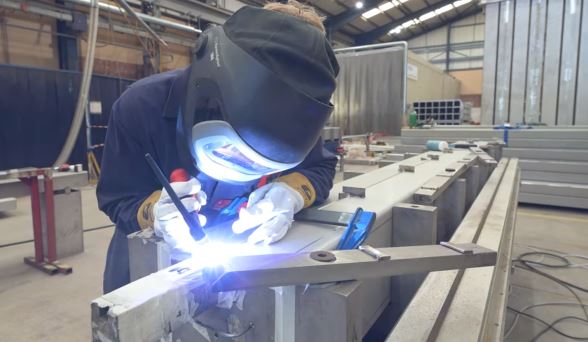
The rack took 16 years to design and fabricate. Weighing 7 tonnes and standing 5.5 metres high, the stainless steel containers have been built by a consortium of Cumbrian manufacturers and Stoke-based Goodwin International.
Between them, they will manufacture 160 racks. Another 340 racks will be needed in the future. It’s a key contract for Carlisle-based Bendalls Engineering and Workington’s West Cumberland Engineering, who lead the Cumbria Manufacturing Alliance making half the racks.
A Sellafield Ltd spokesman said: “We’re proud of the role we play in keeping electricity flowing to homes and businesses by receiving and storing the UK’s spent nuclear fuel.
“Following previous changes to the way the UK manages its spent fuel, we innovated and invested in our facilities to increase our storage capacity.
“Because of this, we’re able to accommodate all current and future arisings, including as a result of the recent lifetime extensions at EDF Energy stations. We continue to work closely with EDF Energy and other partners to fully understand the additional demand and to ensure we’re ready to respond when required.”