

Ten minutes to reach the summit of Scafell. Thirty minutes to cross to the Isle of Man. The speed with which an air ambulance can reach casualties from their base in the heart of the Eden Valley is inspiring.
When every second counts, the twin engine Great North Air Ambulance and highly skilled pilot and crew are on standby to lift off at a moment’s notice from Langwathby.
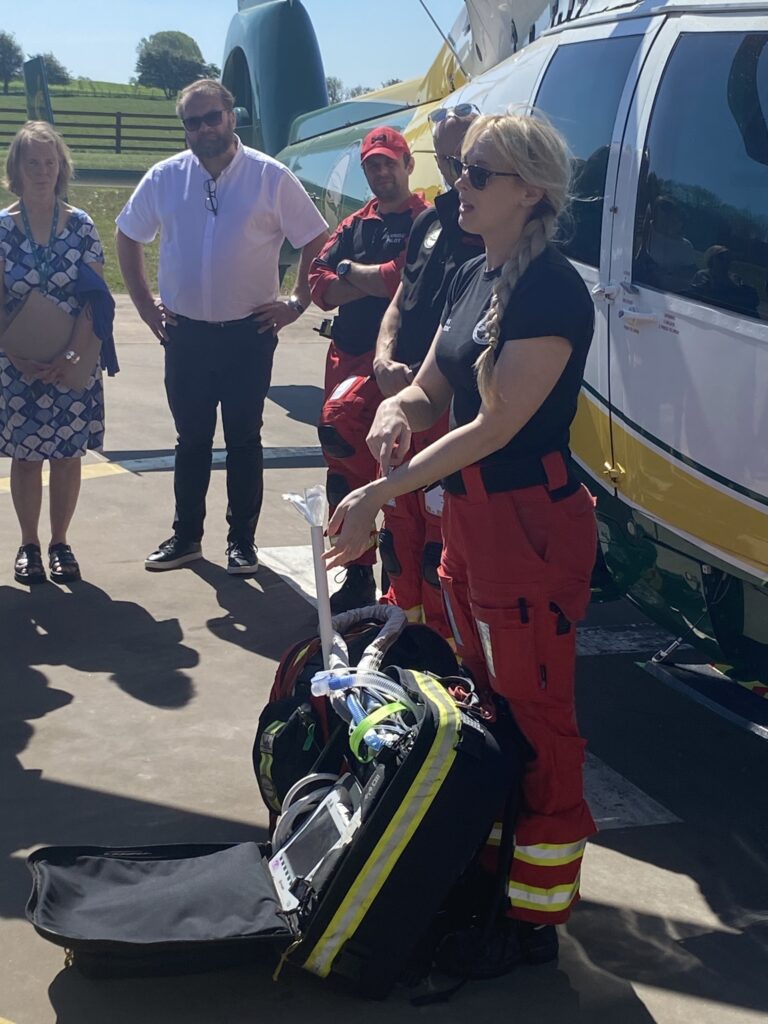
Cumbria Chamber of Commerce this week invited businesses to the helipad to see for themselves how the operation works and hear how much it costs to keep the service operational.
The answer to the question of cost is £9.3 million or around £25,000 per day.
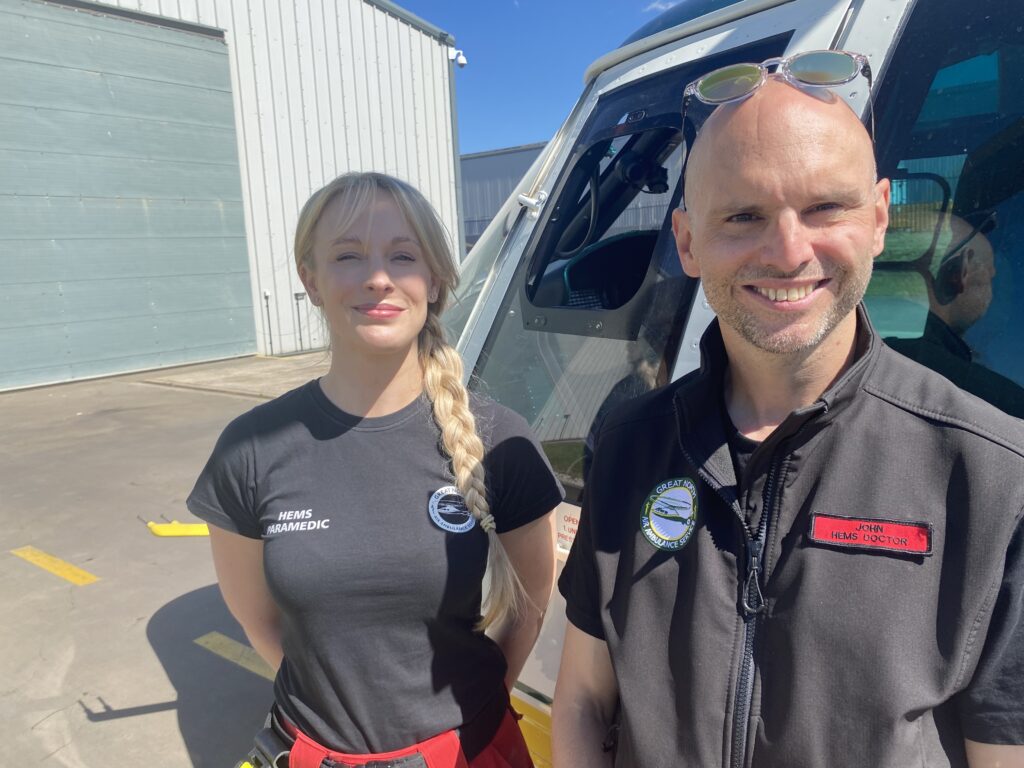
“To start with the emphasis was on speed and that was a great benefit to be able to go to somewhere and then be at a large hospital quickly,” John, a consultant in pre hospital emergency medicine, said.
“Over the years as we’ve innovated and progressed the focus is now on what treatment can be delivered at the scene because that’s the part that makes the difference in terms of patients.”
Last year the charity marked 20 years in operation. After initially serving the North East, the air ambulance now covers Cumbria and the Isle of Man.
“We can treat a really wide variety of patients ranging from medical to trauma,” Sarah, a critical care paramedic, said. The aircraft can reach NHS main sites in the north east and north west quickly, relaying information in flight.
The air ambulance is part of a wider network which offers support to neighbouring regions when help is needed.
The Great North Air Ambulance was the second air ambulance to support emergency services called to the stabbing incident last summer in Southport.
“Any skill and procedure carried out in a resuscitation room in an accident and emergency department can be done here,” John added, showing Business Crack around the helicopter with understandable pride.
Some of those who have witnessed the work of the air ambulance at first visit to offer their thanks to the crew who came to their aid.
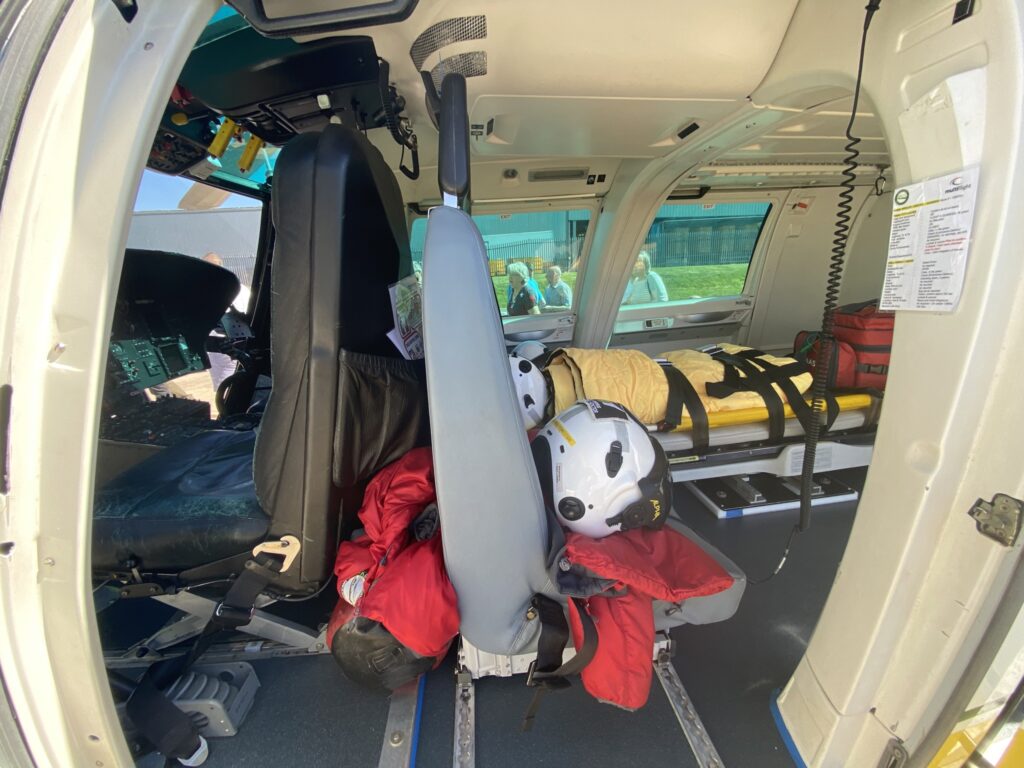
“When they do come back it’s job satisfaction like no other,” John said.
As for the future, events such as the chamber’s Business Bites event may well encourage more regular donations on which the charity depends to keep flowing in.
As demand for the service shows little sign of reducing and advances in medical care continues, the running costs too continue to increase.
“Part of the UK air ambulance network is innovation, finding new procedures and techniques that are just being introduced to hospitals now and weighing up the advantages of them being introduced onto helicopters,” John said.
As for the hundreds if not thousands who have already benefitted from the work of the air ambulance which celebrates 21 years of operation this year, the dedication to continue innovating has already made a difference.