



The cost of the decision to retire two Barrow-built Royal Navy landing platforms, one of which is now destined for Brazil, and progress on the Astute and Dreadnought submarine programmes are among facts published in the Ministry of Defence annual report and accounts.
Business Crack’s Nigel Thompson has been reading through the document.
‘The threats that we now face are more serious and less predictable than at any time since the Cold War, including war in Europe, growing Russian aggression, new nuclear risks, and daily cyber-attacks at home.’ Defence secretary John Healey’s opening words in the report make for sobering reading as he highlights ‘a new era of threat.’
The government’s Strategic Defence Review released this summer made much of Barrow’s vital role in what the Prime Minister said would be an ambition to ‘deliver a new sub every 18 months.’ The demand for the remaining Astute class submarines to be delivered and be serviceable is strong. In July HMS Astute arrived in Devonport for a mid-life refit after 15 years’ service. HMS Agamemnon, alongside in Barrow at the moment, was commissioned by the King this autumn with the seventh and final Astute, HMS Achilles, ‘in the later stages of construction in Barrow’ according to Royal Navy.
The end of year report paints a positive picture for both Astute and the next generation Dreadnought-class submarines.
It states:
“The Dreadnought ballistic missile submarine programme is on track for the First of Class, HMS Dreadnought, to enter service in the early 2030s. Five of the seven Astute Class attack submarines have now been delivered to the Royal Navy, with Boat 5, HMS Anson, having completed sea trials in April 2024. Boat 6 was launched in October 2024 in preparation for the final stages of build and commissioning, and construction on Boat 7 continues.”
The report also mentions the role the Royal Navy played in monitoring the activities of a Russian vessel believed to be involved in intelligence gathering in the Irish Sea twelve months ago. In January this year it was confirmed a Royal Navy submarine, likely to have been an Astute-class boat, was authorised to surface near the Russian ship.
Work to refurbish the biggest submarine dry dock in Devonport, Plymouth at a cost of £200m was completed and reopened allowing what the report says is the ‘continuation of the upkeep of ballistic missile Vanguard Class submarines.’
The Australia, UK and US partnership (AUKUS) is mentioned as continuing with the tri-lateral partnership advancing.
The accountability part of the report, the section that includes the area where the MoD is held to account by politicians, shows how much the decision to retire HMS Bulwark and Albion, the Barrow-built amphibious landing vessels actually cost.
The report details financial ‘losses’ which are assets that have been retired, spending on projets which were then abandoned as well as equipment lost through accidents.
Albion and Bulwark combined are said to have had a value of £428m. Some of this (reported to be around £20m) was recouped with the sale of Bulwark to Brazil which was confirmed in September. The fate of Albion is unclear.
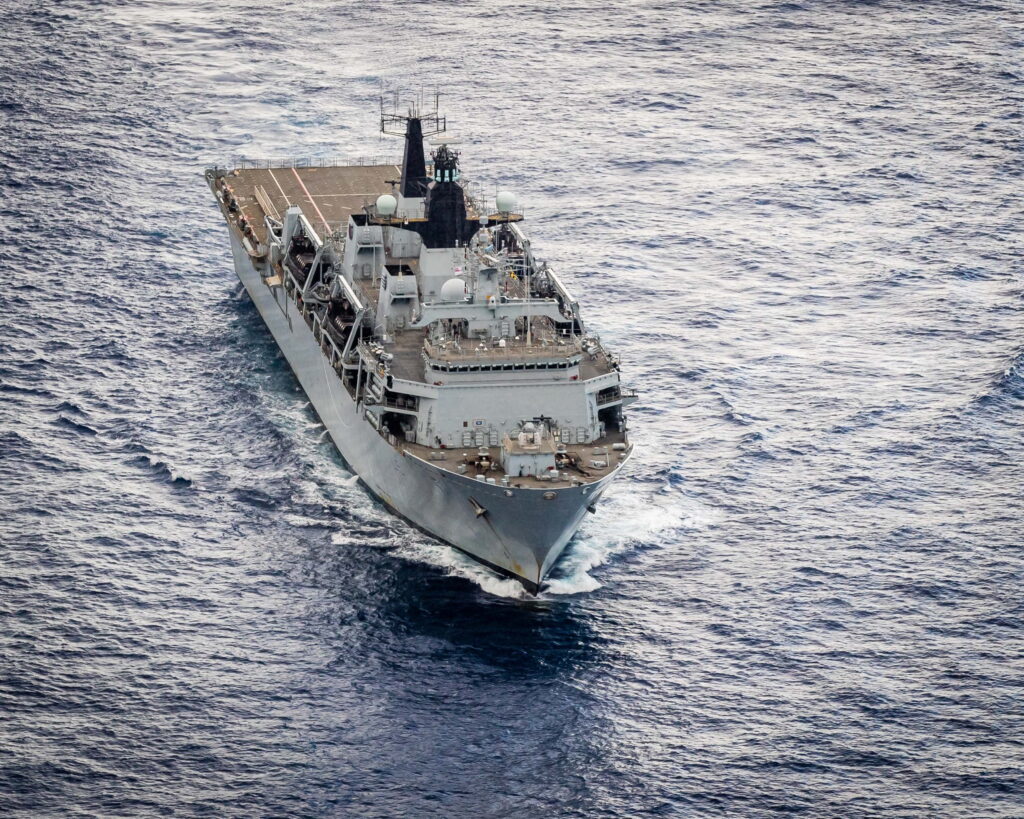
Meanwhile the report also notes the retirement of two other Barrow-built ships, Wave Ruler and Wave Knight was £58m.
Also detailed are so-called ‘fruitless payments’ which are defined by the Ministry of Defence as cases where money is paid yet nothing is received.
The largest, £8.9m, was for ‘training activities linked to submarine acquisition programme’ while £3m was paid as a ‘fruitless payment’ for the Dreadnought programme.
Elswhere £4.5m was paid in settlements due to bullying, harassment, discrimination, physical and sexual abuse and assault.
£4.4m was made in special payments made under the war widow ex gratia payment scheme
£3.2m in settlements for asbestos related disease was also paid.
As the defence secretary concludes in the accounts, ‘defence is now central to both our national security and our economic growth.’